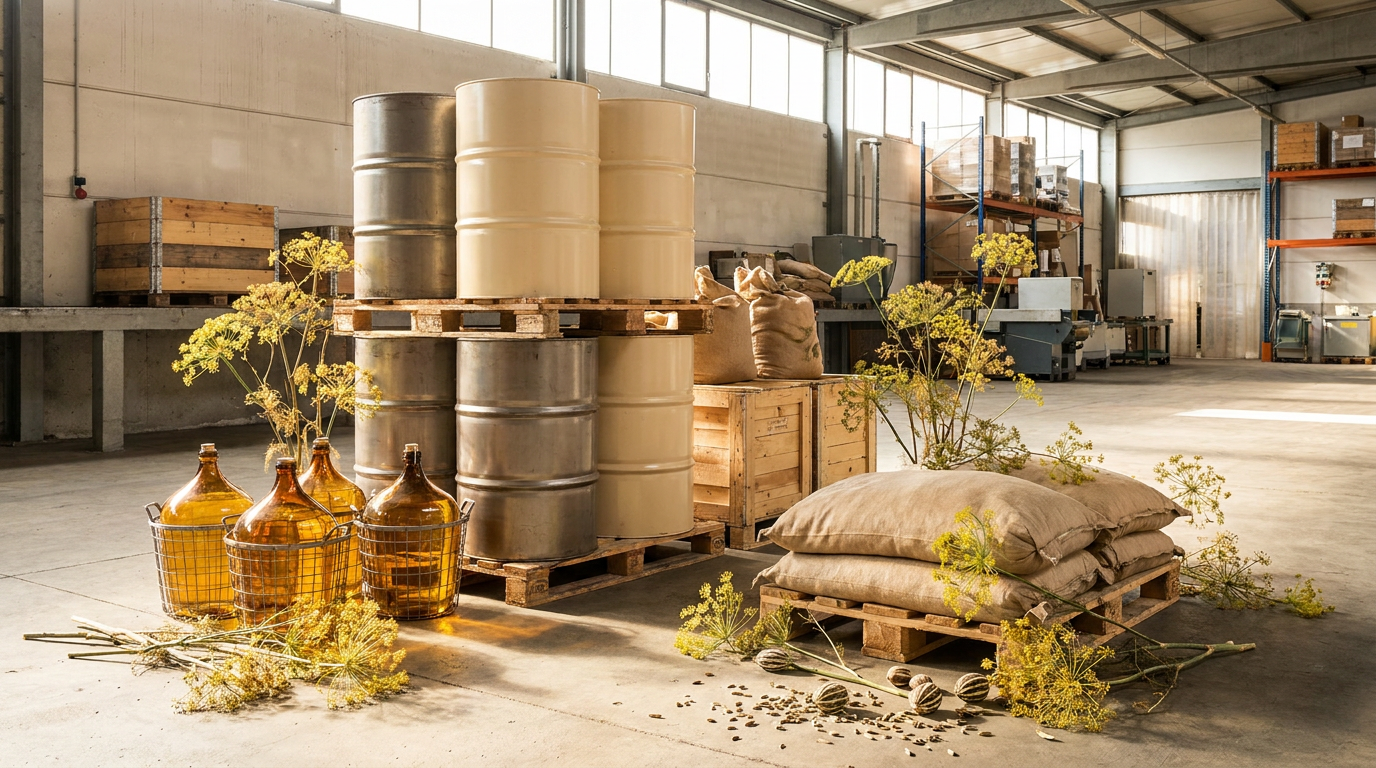
Fennel essential oil moves through the wholesale trade in far larger volumes than a single bottle, and the buyers on that side of the ledger care about different things than a home hobbyist: consistent aroma from batch to batch, a botanical species that matches the label, and packaging that scales from a five-pound pail to a full drum. This guide covers how sweet fennel oil is actually sourced and graded, who buys it in volume, and what documentation separates a serious supplier from a reseller repackaging someone else's drum.
Compare pail and drum pricing on the wholesale pricing page before you request a quote.
Sweet fennel essential oil is steam-distilled from the crushed seed of Foeniculum vulgare, the feathery Mediterranean herb that gives the oil its anise-forward opening and earthy, peppery finish. The distillation itself is a straightforward steam process, though yield and aroma balance shift with harvest timing and still pressure, a relationship covered in more depth in how the crushed seed is steam distilled. Buyers sourcing at volume care about this because a rushed or over-pressured run can push the aroma toward flat and grassy instead of the sweet, layered profile the trade expects.
The plant itself has a long trade history along Mediterranean coasts, where fennel has moved between kitchen, apothecary shelf, and perfumer's bench for centuries, a lineage traced in a short history of the plant and its still. For a fuller primer on the oil itself, botanical sourcing, and how it differs from related spice-seed oils, see the complete guide to fennel essential oil.
| Sold as | What it actually is | How to recognize it |
|---|---|---|
| Sweet fennel essential oil | Either the true mild, fragrant sweet variety or the harsher bitter fennel chemotype, both drawn from Foeniculum vulgare but built from different aromatic ratios | Compare label wording against the aroma: sweet fennel opens soft and licorice-like, while bitter fennel runs sharper and more austere |
| Fennel oil at fragrance-counter pricing | Often a synthetic fragrance compound built to smell like fennel rather than a steam-distilled essential oil | Ask for the botanical name and extraction method in writing; a genuine essential oil lists Foeniculum vulgare and steam distillation, a fragrance oil will not |
| Pure fennel oil at a bargain bulk rate | Sometimes stretched with cheaper anise oil, which shares fennel's licorice-sweet top note but skips its earthy, peppery depth | Request GC-MS data and compare the profile; an anise-cut batch reads flatter and more one-note than true fennel |
| Spice-seed oil in a mixed wholesale lot | Occasionally caraway seed oil relabeled, since both are seed-derived and anise-adjacent in aroma | Cross-check the botanical name printed on the certificate of analysis against the species you ordered |
None of these substitutions are illegal on their own, spice-seed oils occupy a crowded and often loosely labeled corner of the essential oil trade, but they are not what a buyer is paying fennel pricing for.
The real sourcing trap with fennel is aroma similarity: sweet fennel, bitter fennel, anise oil, and synthetic fennel fragrance all sit close enough on the nose that a rushed buyer can sign off on the wrong barrel. The fix is document-first purchasing, a botanical name, an extraction method, and a batch-specific COA, checked before the drum ships, not after it lands.
The wholesale buyers who actually reorder fennel essential oil are working buyers, not casual browsers: cold-process soap makers running fennel into a full batch recipe, candle studios testing fragrance load against soy wax, and bath and body brands building fennel into salts, scrubs, and body oil lines. A newer buyer sorting out what a fair bulk price looks like before committing to a drum can start with the price guide to what a fair bottle costs and work up from there, or read the broader complete quality guide before requesting quotes.
Independent perfumers and small fragrance houses buy fennel too, drawn to its top-to-middle note placement and the way it lifts lavender, rose, sandalwood, and citrus compositions. Diffuser blend brands and seasonal home-fragrance lines are steadier repeat buyers, restocking ahead of each production run rather than ordering once. Across all of these categories, the practical question is the same one addressed in the guide to wholesale sizes for makers: which size tier matches this stage of production.
Before a bulk order goes out, a serious buyer checks the same handful of things regardless of what they are making with it.
Documentation is the entire difference between a wholesale supplier and a reseller splitting a single drum into smaller bottles. Before placing a volume order, request the current published Certificate of Analysis and, if the label or GC-MS report looks unfamiliar, read through how to read a fennel oil label and GC-MS report before you order.
Fennel essential oil here is sold across nine real sizes, from a 0.5 oz sample bottle meant for testing a formula up through 5 lbs and 25 lbs pails for production runs, to a full 400 lbs drum for buyers who have already qualified their formula and their supply chain.
Full pricing and per-pound rates for the pail and drum tiers sit on the wholesale pricing page, which is the fastest route to a quote once a buyer knows which tier fits their production volume.
Start with a 0.5 oz or 1 oz bottle to confirm the aroma and performance against your formula before committing to a larger size.
Once the sample checks out, request pricing on the pail and drum tiers through the wholesale pricing page for your expected production volume.
Place the bulk order against the batch-specific Certificate of Analysis, confirming the lot number on the paperwork matches what ships.
Set a standing reorder point ahead of your production schedule; requesting a fresh sample from each new lot keeps aroma consistent run to run.
The sections below cover the specific applications that drive most wholesale fennel orders, with sourcing notes and size guidance for each.
Fennel's sweet, anise-forward top note holds up well through saponification, making it a steady repeat buy for soap studios running seasonal and year-round bars.
Read the sourcing guide →Candle studios buy fennel in volume once they have logged a fragrance load that throws well in soy wax without scorching the top note.
Read the sourcing guide →Bath and body brands fold fennel into salts and soaks for its soft, sweet top note, buying in pail sizes once a recipe is set.
Read the sourcing guide →Seasonal and year-round diffuser blend brands buy fennel to round out sweet, herbaceous recipes, restocking ahead of each production run.
Read the sourcing guide →Body oil and skin care brands use fennel sparingly in diluted carrier-oil formulas, sourcing it with dermal dosing limits in mind.
Read the sourcing guide →Home fragrance brands blend fennel into room sprays and linen mists for a bright, sweet note that pairs naturally with citrus.
Read the sourcing guide →Indie perfumers use fennel as a top-to-middle note that lifts floral and woody accords, buying in smaller volumes but reordering often.
Read the sourcing guide →Reach out directly and we will walk through sizing, documentation, and lead times.